
Testing & Inspection
Periodic Electrical Testing& Inspection Across Stirlingshire,Falkirk, Edinburgh & Glasgow.
Periodic testing and inspection that keeps your installation compliant, safe, and defensible — not a scare-tactic upsell, and not a rubber stamp.
SJIB approved · Same-day reports where possible · Verified reviews on MyBuilder & MyConstructor
Service overview
What it is, who it's for,
and when to book it.
Periodic testing and inspection is the maintenance side of the trade — the tests, reports and small remedial fixes that keep an installation compliant between the bigger events (rewires, board upgrades, EICRs). Done properly, it catches issues early and keeps insurance and rental paperwork current.
What the service is
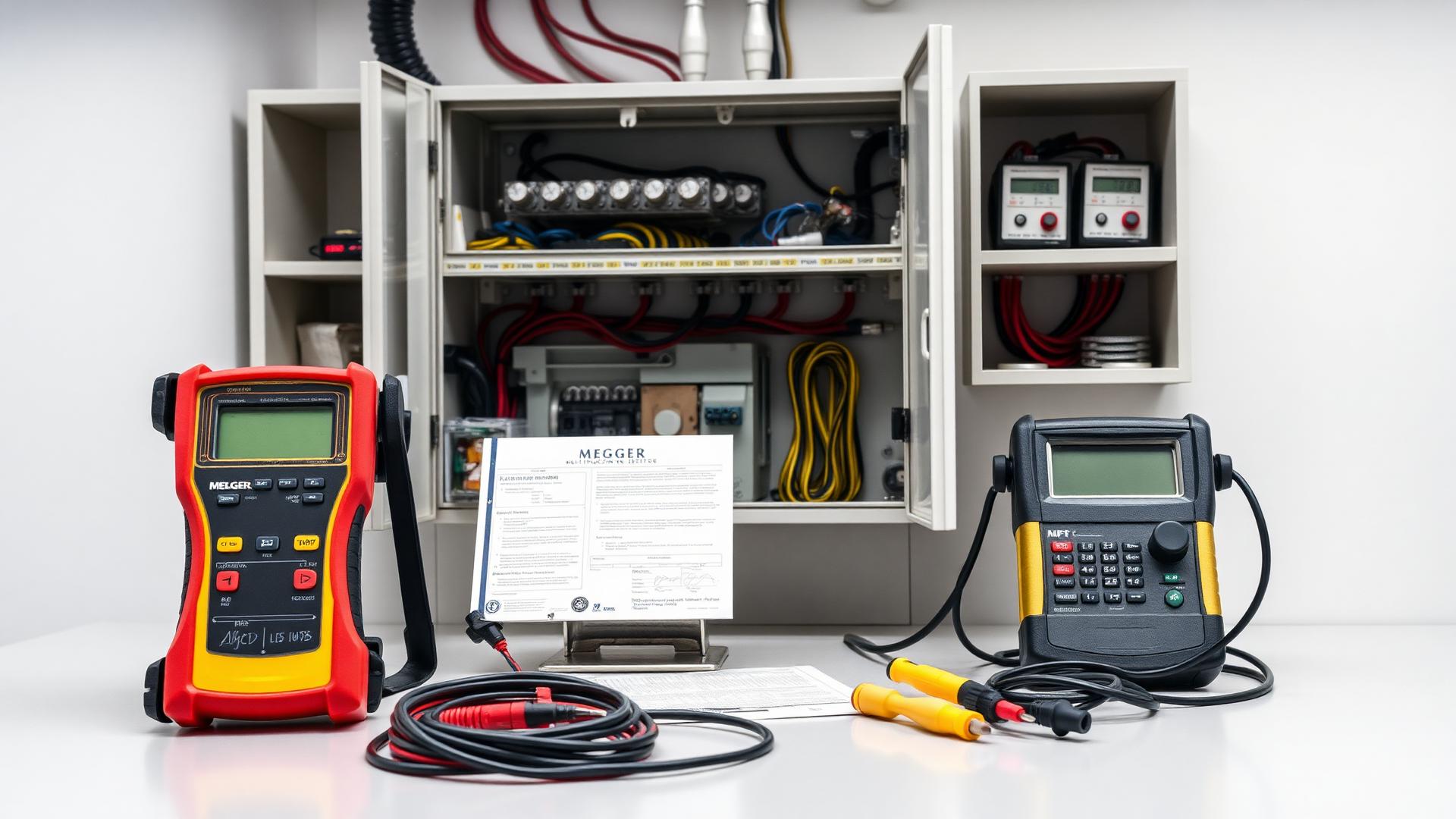
This includes visual condition reports, targeted circuit testing after alterations, RCD trip time testing, insulation resistance testing, earth loop impedance verification, and re-testing of previously flagged remedial work.
Who it's for
Homeowners wanting a health check between full EICRs, landlords running small portfolios who want circuit-level testing between statutory reports, developers signing off finished projects, and anyone who has had recent alterations done and wants independent verification.
When it's needed
After any significant electrical work by a third party, before selling or letting a property, before a homebuyer survey, and periodically (typically every 5 years for rented, every 10 for owner-occupied).
Why professional help matters
Testing gives you documented, defensible evidence of the installation's condition — the paperwork insurers, letting agents, buyers and future electricians all rely on. Without it, you're relying on the last person who worked on the installation having done everything correctly, without proof.
The cost of ignoring it
Small electrical issues
rarely stay small.
Skipping periodic testing is the same argument as skipping the boiler service — nothing bad happens, until it does, and then it happens expensively.
What happens if it's left
- →Undetected insulation degradation eventually becomes an earth-leakage fault, then a nuisance trip, then eventually a shock or fire risk.
- →Missing test paperwork after alterations makes it very hard to prove the installation is compliant in the event of an insurance claim.
- →Landlords without documented interim testing between statutory EICRs have no evidence of ongoing safety, which matters legally.
- →A homebuyer survey that flags 'no recent electrical testing' can be enough to trigger a price renegotiation.
- →RCDs that have never been tested for actual trip time can be silently non-functional — they look fine, they just don't trip when they need to.
Common mistakes to avoid
- ×Assuming an EICR done ten years ago still covers current installations — it doesn't, and it never has.
- ×Booking testing from the same electrician who did the alterations, without an independent check, when the whole point is independent verification.
- ×Skipping testing on additions like a new garden power circuit or an extension — every addition needs its own certificate.
- ×Confusing PAT testing (portable appliances) with fixed-wiring testing — different scope entirely.
Our process
A predictable five-step
process — every job.
No surprises, no vague timelines. You'll know what's happening at each stage and what comes next.
-
Step 1
Scope Agreed
You tell Electrust what's changed, what's been added, and what needs verification. A fixed price is issued for the testing scope.
-
Step 2
Visual Inspection
Board condition, accessory condition, cable condition wherever visible, and any signs of scorching, damp, water ingress or DIY intervention.
-
Step 3
Testing
Dead and live tests as required by the scope: continuity, insulation resistance, polarity, Zs, RCD trip times. Every result recorded on a test schedule.
-
Step 4
Report
A clear report with the schedule, plain-English summary and any observations coded to the same BS 7671 standard as an EICR. Issued the same day where possible.
-
Step 5
Remedial Work
Any observations that need remedying are quoted separately and handled by Electrust if you'd like — with post-remedial testing and re-issue of the report as satisfactory.
Why customers stay with Electrust
Six practical benefits,
measured on real jobs.
Speed
Targeted testing after alterations typically takes 1–2 hours per circuit or small area, with same-day reports.
Safety
RCD trip times, insulation resistance and earthing all verified against BS 7671 — no assumptions, no unverified 'it's fine'.
Longevity
Regular testing catches deterioration early and extends the practical life of the installation.
Cost Savings
Small issues caught by testing are cheap to fix. The same issues found later after a failure are expensive.
Reliability
Documented, dated evidence of condition — the paperwork insurers and letting agents actually want to see.
Peace Of Mind
Whether you're letting, selling, renovating or just staying put, you know exactly what state the installation is in.
The detail
Materials, methods
and the situations that shape them.
What testing actually looks like in practice, and how it differs from a full EICR.
Post-Alteration Testing
After any electrical alteration (new circuit, added sockets, added lighting, kitchen refit, extension), the altered work must be tested and certified. This is a Minor Works Certificate for small alterations or an Electrical Installation Certificate for new circuits.
Interim Testing (Between EICRs)
Not statutory, but hugely useful for landlords with several properties — a targeted mid-cycle check catches deterioration without waiting for the full 5-year EICR.
RCD & RCBO Verification
RCDs are tested for trip time at rated current (typically ≤300ms) and at 5× rated current (typically ≤40ms). Devices outside these parameters are silently non-compliant even if they trip during a test-button push.
Insulation Resistance Testing
Applied at 500V DC between line/neutral and earth. Values above 1MΩ are acceptable but investigated further where they've dropped since the last test — declining insulation resistance is the leading indicator of degrading cable.
Earth Loop Impedance & PSCC
Confirms the earth path is intact and capable of clearing a fault fast enough to protect against shock and fire. Also confirms the prospective short-circuit current at the origin, which matters for correct device selection.
Reports & Certificates
All test data is recorded on the appropriate BS 7671 form — Minor Works, EIC, or an interim report where scope doesn't warrant a full EICR. Issued same day where possible and stored digitally so re-issues are easy.
FAQ
Straight answers before
you pick up the phone.
Still unsure? Call 07568 558466 — the phone's answered 7am–10pm, 7 days.
How is this different from an EICR?+
An EICR is the full-installation report done at set intervals (5 years rented / 10 years owner-occupied). Testing and inspection covers everything else: post-alteration testing, interim verification, RCD-specific testing and targeted checks after suspected faults.
How much does testing cost?+
It depends entirely on scope — a single-circuit post-alteration test is quick and inexpensive, a full property interim check runs closer to an EICR. Every scope is quoted fixed before work starts.
How quickly can you attend?+
Testing is usually scheduled within a few days. For time-sensitive scenarios (property sale, tenancy start) same-week appointments are usually available.
Do I get paperwork I can share?+
Yes — every test produces the appropriate BS 7671 form, issued the same day and stored digitally for future re-issue.
How long does the testing itself take?+
Small post-alteration tests are 30–60 minutes. Interim property checks typically 2–3 hours. RCD-only verification often under 30 minutes.
Do you handle emergency testing?+
Yes — where a fault has occurred and you need independent verification of what's safe to re-energise, urgent testing is usually accommodated the same day.
Is periodic testing legally required?+
For rented property in Scotland, a full EICR is legally required every 5 years. Interim testing isn't statutory but is strongly recommended and often required by insurance policies and letting agents.
Do you cover Edinburgh and Glasgow for testing?+
Yes — regularly, particularly for small landlord portfolios where several properties can be tested in a block.
Related services
You might also need…
EICR Certificates
A proper Electrical Installation Condition Report — no ticked boxes, no scare-tactic upsells. £140–£200 based on the size of the installation, reports typically issued same day.
Learn moreConsumer Unit Upgrades
A modern 18th Edition consumer unit with RCBO protection on every circuit — fitted in a day, tested, certified and left as tidy as we found it.
Learn moreFault Finding & Repair
Nuisance trips, dead circuits, warm sockets, buzzing lights — diagnosed methodically, explained in plain English, and fixed cleanly the same day where possible.
Learn moreGet a free quote
Want independent verification your installation is safe and compliant?
Fixed-scope quotes, same-day reporting, remedials handled in-house. Call 07568 558466.